
It is possible to finance a motorcycle with no deposit required at all.
However, this will depend on your credit profile, bike valuation, where you are buying it, and any extras you are rolling into the loan.
By paying a deposit you reduce your total borrowings, and lower the risk to the lender. But in most cases this is optional.
In this article, we will discuss when a deposit is needed, and how much, when applying for a motorbike loan.
Key Takeaways: Motorcycle Deposits
| No Deposit is Possible | Most buyers with a strong credit history and stable income can secure a motorcycle loan with $0 upfront. |
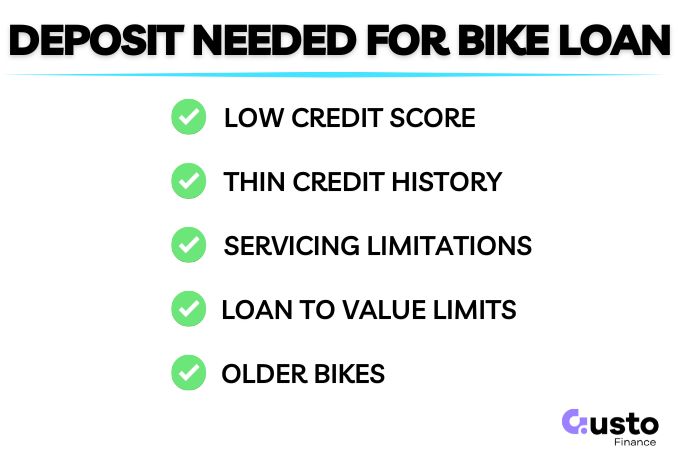
| When a Deposit is Required | A deposit may be required if you have a poor credit score, if the loan amount exceeds LVR limits, or if the bike is an older model. |
| Benefits of Paying a Deposit | A deposit lowers your monthly repayments, reduces total interest paid, and reduces exposure to periods of negative equity. |
Purpose of a Motorbike Deposit?
A deposit is your cash contribution toward the purchase price of your motorcycle, which directly reduces the total amount you borrow.
You may still find that your loan is more than the bike is worth. This is due to other costs required to secure financing and prepare the bike.
This can include:
- On-road costs such as rego, CTP, and stamp duty.
- Accessories and insurance.
- Loan establishment fee
- Risk fees if you have a lower credit score.
Some lenders allow you to bundle these extra costs into your motorbike loan, while others only finance the bike itself.
Which means a greater cash contribution to the purchase.
When You May Require a Motorcycle Deposit
A lender will only require a deposit in specific circumstances where they need to limit their exposure to the borrower.
Poor Credit Profile
If a borrower is assessed as higher risk then a lender may require a deposit as part of a conditional approval.
This means the borrower has skin in the game, and the loan amount is also reduced.
A poor credit report could be the result of past defaults, or even just thin credit activity for a younger borrower.
Either, it will place you in the higher risk category and the lender may cap the maximum loan amount.
Unable to Service Loan Amount
A lender will assess your ongoing repayment capacity as part of the application process.
If you do not have the capacity to meet the repayments, and all other factors are ok, you could be offered a lower loan amount.
It will be up to you to cover any shortfall out of your own pocket if you wish to proceed.
Loan to Value Ratio (LVR) Limits Exceeded
Lenders will have a maximum loan amount possible in relation to the value of the bike.
For example, if the motorbike is worth $10,000, and the maximum LVR is 140%, then the total loan cannot exceed $14,000.
If your establishment fees, on road costs, and any insurances you ware trying to bundle into the loan exceed this maximum then you will be required to cover the shortfall.
This can be more problematic with private sales where there are fewer lender options, additional fees could be payable, and valuations can vary.
Let’s say a lender values the motorbike at $12,000 but the seller wants $13,000, you may have to cover the difference if you cannot get the seller to budge.
Older bikes
Lenders are conservative when assessing the remaining lifespan and resale value of older motorcycles.
In some cases it will not qualify for security at all and you may be pushed into a higher cost unsecured loan.
While it is rare, a lender may agree to finance a motorcycle that is close to their threshold but cap the total loan amount.
How Much Deposit May Be Required?
The size of the deposit required will be determined by the reason it is needed at all.
If it is a valuation problem, the deposit would need to be sufficient to bring the LVR down to the acceptable level.
Whereas if it is due to a poor credit profile and the lender just wants to see a reasonable contribution then something in the 10% to 20% range could be sufficient.
This would be specified in the conditions of the loan approval once your bike loan application has been assessed.
How to Secure No-Deposit Motorbike Finance
Most buyers are not required to pay a deposit when purchasing their new bike under finance.
If you do not fall into any of the categories mentioned above then you will generally be ok.
This means:
- A strong credit history paired with a stable income.
- A sensible loan amount that clears serviceability tests.
- A newer bike purchased through a dealership for easy valuation.
- All fees and costs built into the loan are below the maximum LVR.
The trade-off for keeping your cash upfront is higher repayments and loan costs.
Benefits of Paying a Deposit
If you can afford to make a deposit then reducing the loan payable can be beneficial to you in a number of ways.
1. Lower Repayments
A smaller loan means lower minimum repayments.
You can choose to pay extra to repay the loan faster if you can, but you can also preserve your cash flow for other priorities in your life.
Freedom of choice in your household budget can be an important quality of life factor.
2. Lower Loan Costs
Borrowing less means you pay less overall interest over the loan term.
A lower Loan-to-Value Ratio (LVR) also reduces lender risk, which could lead to a lower interest rate and fee structure.
Which further adds to your savings.
3. Protects You from Negative Equity
The above scenario discussing repossession is not a fun experience for anyone. It is stressful and could p[potentially ruin your credit history.
Paying a deposit upfront and lowering your initial borrowings can protect you from this in the future.
Life can change fast and having the option to sell your car to repay the loan in full can give you peace of mind that you will not end up in a situation you are unprepared for.
4. Greater Chance of Loan Approval
A smaller loan reduces the risk for the lender and can be viewed favourably.
Saving a deposit also demonstrates that you are managing your budget responsibly and have surplus cash flow at the end of each month.
All things that a lender likes to see and will increase your chances of getting your application approved.
Frequently Asked Questions
What is the minimum deposit for a motorbike loan?
Many lenders offer zero deposit loans to strong applicants. A 10% to 20% contribution safely lowers your interest rate. Minimums change based on bike age and credit tier.
Can I finance a used motorbike with no deposit?
Yes, but approvals are lender dependent. Older bikes attract stricter rules. You will need a cash deposit if the asking price exceeds the official vehicle valuation.
Do I need a deposit for a private motorbike sale?
Not always, but it is common. Lenders view private sales as risky. Be prepared to cover any valuation shortfall out of pocket.
Does the loan type change the deposit required?
Deposit rules are driven by risk and lending policy, not the specific finance product. However, your loan structure dictates which extra costs can be bundled.
Which Deposit Strategy Suits You?
While a 0% deposit is possible for prime borrowers, targeting 10% to 20% improves approval odds and lowers your total loan costs.
Remember that financing used motorcycles through private sales could create a valuation shortfall requiring upfront cash.
Wondering how much deposit you need for a motorbike loan? Speak to Gusto Finance.
We match your credit profile with the right lender to avoid wasted applications.
