
Eligibility for Commercial finance depends more on the borrower and use of the vehicle, rather than the vehicle type.
You must have an ABN and use the vehicle predominantly for business purposes to qualify under the tax rules
In this article, we will discuss the most common types of commercial vehicles in Australia and the compliance traps most buyers miss.
Who Can Finance a Commercial Vehicle
As long as you have an ABN you can qualify for commercial finance. Some lenders will require a minimum trading history from one day up to two years.
The longer you have been in business the more options you will have.
Typical commercial borrowers are in one of the following categories:
- Sole traders
- Small to medium enterprises
- Large companies
50% Business Use Rule
The asset being purchased must also be used for commercial purposes more than 50% of the time.
This is a necessary condition for:
- Lender eligibility for commercial loan products.
- Tax deductibility of expenses and depreciation of asset value.
If you are unsure whether you qualify then get in touch with our expert team of brokers below for a free consultation.
Commercial Vehicle Categories
1. Utes and Cab-Chassis
The ute is the default vehicle for a broad range of Australian professions.
Their versatility are useful for specialised trades, agriculture, and some professional services that frequent construction sites and mining activities.
Single-cabs maximise tray space and are a pretty straight forward commercial use vehicle.
If you opt for a dual-cab there may be a greater question mark over the level of personal use of the vehicle for tax purposes, but you’ll have no problem financing the ute.
2. Commercial Vans
Vans provide fully enclosed security, lots of internal storage space, and a massive canvas for commercial branding.
They are a suitable option for couriers, trades, catering services, dry cleaners, and a range of other professions.
Variations include high-roof models with standing room, refrigerated vans for food delivery, and large vans that can handle a big payload.
Storage space can also vary significantly from 4m2 up to approximately 15m2.
Van can also be converted into specialised bodies suited to mobile mechanics, locksmiths, and food trucks.
The fit-out often costs as much as the base vehicle and will need to be factored into your van finance solution.
3. Pantech Trucks
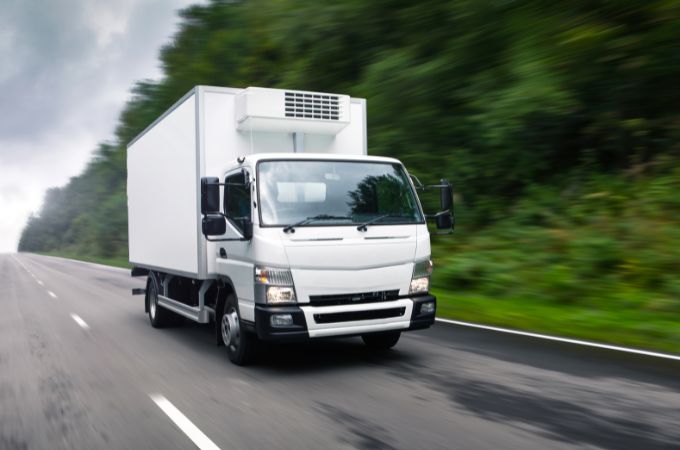
A Pantech truck (cab with a solid box body) is the standard for high-volume, lower-weight cargo like furniture, appliances, and secure B2B freight.
They are below the 4.5-tonne Gross Vehicle Mass (GVM) limit.
Models under this threshold run on a standard car licence, while exceeding it requires a Light Rigid (LR) licence.
If you need more space than a van, a light Pantech allows you to upgrade without needing a new category of license.
These are typically available from car rental companies for this reason.
Some models are fitted with hydraulic tail-lifts and internal restraint rails to ensure secure, efficient loading.
4. Flatbeds and Tray Trucks
Flatbeds are heavier trucks that provide an open deck for irregular loads that standard bodies cannot accommodate.
This configuration is essential for transporting timber, steel, pallets, and machinery that requires forklift or crane loading from the side.
You must secure loads using rated straps, chains, and side gates, as there is no body to contain the load.
Tarps may also be necessary to protect cargo from weather damage.
Depending on the size of your flatbed, you may need a Light Rigid (LR), or Heavy Rigid (HR) licence to operate.
5. Tippers
Used for loose materials like soil or rubble so they can be offloaded efficiently.
A hydraulic tipping body turns hours of shovelling into a thirty-second task and is essential equipment for landscaping, civil works, and rubbish removal services.
These are usually a 4×4 configuration to enable lower risk driving over rougher terrain.
Think construction sites, and rubbish tips, where a drop zone may be harder to reach.
You may also require a Light Rigid (LR), or Heavy Rigid (HR) licence to operate depending on the size of the truck.
6. Refrigerated Transport
Refrigerated transport is a specialised category that can range from light commercial vehicle to heavy truck and trailers.
They are required to transport food products, florists, pharmaceuticals, and any product that requires verified temperature control.
These vehicles pair an insulated body with a refrigeration unit. Ideally with a fast pull-down speed allowing temperatures to remain below required thresholds in between deliveries. \
7. Tow Trucks
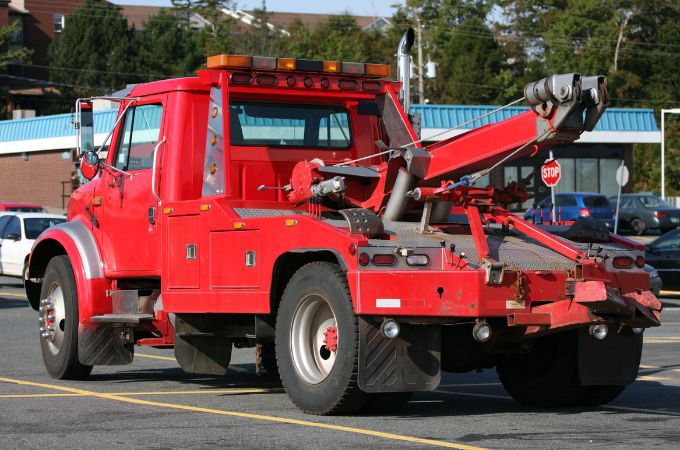
Tow trucks are a form of mobile industrial equipment for salvage, roadside assistance, and transport.
Common setups include tilt-trays, hook-lifts, wheel lifts, and integrated tow trucks.
Usually the heavy lifting gear pushes these units into Light Rigid (LR) or Medium Rigid (MR) license territory.
8. Commercial Passenger Vehicles (Minibuses and Coaches)
These vehicles range from 12-seat minibuses to large coaches.
Often used within tourism and transport services, these vehicles can vary considerably in size and license requirements.
Once you cross the 12-seat threshold or 4.5t GVM typically triggers Light Rigid (LR) licensing.
9. Fleet Cars and SUVs
Regular sedans and SUVs are also commonly used as commercial vehicles.
Think sales reps, field techs, rideshare operators, there is an endless number of professions that need a regular vehicle.
While a business can finance a single vehicle quickly and easily through a low-doc loan, it is often the case that a fleet is needed to support the operation.
This can get more favourable terms on financing and manage that Whole-of-Life cost of the vehicle.
With the expected high annual kilometres, fuel use, and wear and tear on the vehicle being expensive. Getting the best deal on finance is critical to preserve profitability.
10. Truck & Trailers
These are the big semi-trailers used to run the logistics operations and supply chains of Australia’s biggest companies.
Also used in removal services, agriculture, car sales, and a range of big commercial operations.
These are expensive pieces of equipment and are often part of a fleet a company will have on the road.

11. Plant and Machinery
This category covers farm machinery (tractors, harvesters) and site plant (excavators, loaders) for primary production and civil works.
Value here depends on duty cycles and attachment compatibility, not top speed. A machine that cannot run the specific auger or bucket you need is useless.
These assets require specialised equipment finance and need to be structured correctly to suit you business cashflow.
Seasonal and project variations to repayment structures can be used when appropriate.
Choosing the Right Commercial Asset
There are sub categories of every type of commercial vehicle discussed in this article.
The breadth of commercial vehicles is significant and there are finance solutions for each that will be suitable for your business.
However, you need a good broker in your corner to ensure the best deal and most suitable payment structure is secured.
If you are unsure where to start, get in touch with our expert team below to discuss your commercial finance options.
